
What Is Stem Splitting? How It Works & Why Beatmakers Use It

The term stem splitting has become increasingly common over the last few years, describing something that once felt almost impossible: the ability to separate individual sounds from a fully mixed song. In this post, we’ll break down what stem splitting is, how it works, what it’s useful for, whether it’s legal, and the limitations you should know before relying on it.
What Is Stem Splitting?
Stem splitting is the process of taking a finished stereo (or mono) audio file and separating it into individual parts like vocals, drums, bass, and melodic instruments. Normally, when you stream a song or load an MP3, all the recorded elements, like vocals, drums, bass & guitars are combined into a single waveform. You can’t isolate anything without the original project files. In traditional music production, “stems” refer to grouped audio tracks exported from a session, like guitar or drums. These are exported intentionally from the original multitrack session.
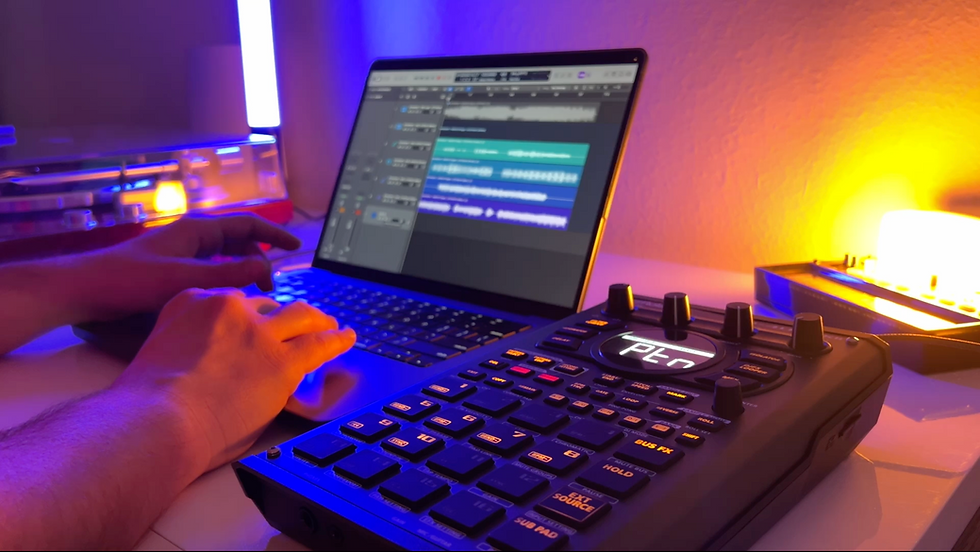
Stem splitting is different. It tries to recreate stems from a finished mix without access to the original session files. Stem splitting uses machine learning (AI models trained on thousands of songs) to analyze the audio and separate those elements into different categories.
Most stem splitters divide audio into four main groups:
Vocals
Drums
Bass
Other (piano, guitar, synths, etc.)
Some tools go further. For example, Logic Pro can separate piano and guitar independently in addition to drums, bass, and vocals. The separation isn’t perfect, but it’s often shockingly usable.
How Does Stem Splitting Work?
Stem splitting doesn’t just “look at frequencies” in a simple EQ sense. It uses trained machine learning models that recognize patterns in sound. These AI systems have been trained on massive datasets of multitrack recordings. Over time, they learn to identify what vocals typically sound like, what drum transients look like in the waveform, how bass occupies low frequencies, and how harmonic instruments behave.
When you load a song into a stem splitter, the AI analyzes the audio and predicts which parts belong to which category. That’s why modern stem splitting has been such an improvement over older phase-cancellation tricks or EQ isolation methods.
Is Stem Splitting Legal?
Using a stem splitter itself is legal. However, what you do with the results matters. If you split stems from a copyrighted song and release new music using those elements commercially, you would still need proper clearance and licensing. Stem splitting does not remove copyright obligations.
What Can Stem Splitting Be Used For?
The most obvious use case for beatmakers is sampling.
You can isolate:
Just the drums from a record
Just the vocals
Just the melodic content
This makes sample flipping cleaner and more flexible... But that’s only the beginning.
Stem splitting is also incredibly useful for DAWless artists or anyone working in hardware workflows. For example, if you record a full jam into any stereo recorder, that track is normally locked. You can’t lower the guitar without lowering everything. You can’t isolate the synth. You’re stuck with the stereo bounce.
With stem splitting, you can:
Separate the guitar from the drums
Lower one element
Extend a section
Add new instrumentation
Quantize certain parts
It opens up a second chance at mixing and arranging after the fact. That’s a much more interesting use case than just grabbing drum loops from old records.
Limitations of Stem Splitting
Stem splitting is powerful, but it’s not magic. Different tools produce different results. Some common issues include:
Artifacts – Warbling, metallic textures, or strange digital residue in isolated tracks.
Bleed – A vocal stem might still contain bits of hi-hats or reverb tails from other instruments.
Transient confusion – A drum stem might include the pick attack from a guitar because the AI interprets that transient as percussive. This can create strange pitch artifacts in drum tracks if you use them in a different key.
Low-end weirdness – Bass separation can sometimes lose definition or introduce phasing inconsistencies, especially if bass overlaps heavily with kick drums.
Phase issues – When recombining separated stems, they may not perfectly reconstruct the original mix due to subtle phase shifts.
The better the source mix and the more isolated the instruments are in frequency and arrangement, the better stem splitting tends to work.
Some Tools That Offer Stem Splitting
Stem splitting has quickly become standard in modern music tools.
Some popular options include:
Logic Pro (built-in Stem Splitter)
Ableton Live (recently added stem separation)
MPC software and some hardware (MPC Live 3, MPC XL)
Koala Sampler (basic stem split function)
RipX (advanced separation software)
Online services
Each tool has slightly different strengths, but they all rely on similar AI-based separation models.
Stem splitting is one of the most exciting tools to emerge in modern beatmaking.
There’s no denying how useful it is for sampling and remixing. But its potential goes beyond that. For DAWless artists, demo recovery, and post-performance editing, it can be a surprisingly powerful mixing tool.
That said, it doesn’t replace skill. You still need taste, arrangement sense, and an understanding of how to use what you extract. Stem splitting gives you raw materials. What you do with them is still up to you.
If you’re curious about modern sampling workflows and gear tips like this, consider signing up for my monthly newsletter for more production insights and a free sampler start kit: https://www.sunwarper.com/mailinglist Sample Packs: https://soundsbysunwarper.bandcamp.com/


Comments